
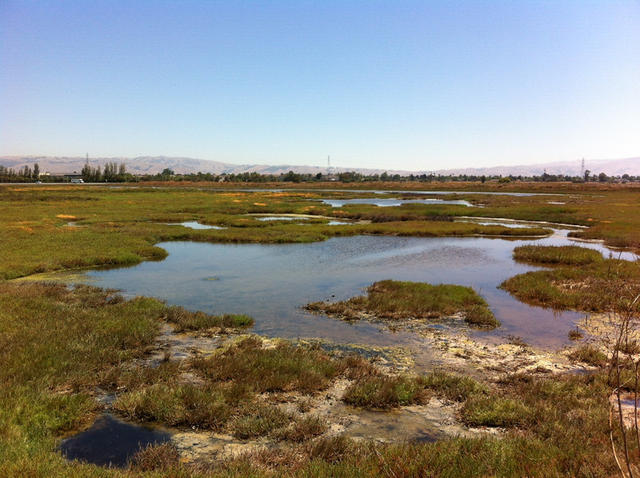
Tidal Marshes are vegetated wetlands that regularly receive some tidal action. High quality tidal marshes contain intricate networks of channels through which the tides move in and out of the marsh complex. Tidal marshes in the San Francisco Bay provide critical habitat for an array of species, including young salmon and steelhead trout, shorebirds and waterfowl that forage in the salt pannes, harbor seals who "haul out" on the marshes to breed and raise their young, and endangered birds and mammals like the endangered California clapper rail and salt marsh harvest mouse who live only in tidal marshes in the Bay. Managed ponds are shallow open water habitat with no tidal flow or managed tidal flow. These wetlands contain water all or part of the year, have various salinities, and provide feeding and roosting (resting) areas for waterfowl, shorebirds, and other waterbirds. The specific types of birds feeding in a pond depend on the specific conditions in the pond. For example, shorebirds and dabbling ducks like shallow ponds while diving ducks prefer deep water. Certain birds like to feed on brine shrimp and brine flies, which only live in higher salinity ponds, while other birds prefer small fish, which live in the lower salinity ponds. See Fact Sheet #3 for a description of the different habitats in the project area and their benefits to wildlife. Also see the Syntheses of Scientific Knowledge for Maintaining and Improving Functioning of the South Bay Ecosystem and Restoring Tidal Salt Marsh and Associated Habitats over the Next 50 Years at Pond and Pond Complex Scales (PDF).