

Meeting Type
Description
Learn about San Francisco Bay breeding waterbirds from Dr. Josh Ackerman of USGS, who has looked at South Bay avocets, stilts and terns to understand how their abundance has changed since the inception more than 20 years ago of the Restoration Project. He has also examined the effect on birds of predators and the utility of various management actions to maintain and expand waterbird numbers as former industrial salt ponds are restored to tidal wetlands. Those management actions include preserving and constructing nesting islands; placing decoys and broadcasting bird calls; hazing predator gulls; and conducting wetland landscape scenario planning. He discusses the results of his team's 2005-2024 nest surveys and research on California gull predation, as well as the success of their social attraction experiments to establish Bay tern colonies, and the "recipe" they have developed through modeling for designing new islands to best attract and accommodate nesting waterbirds.
- See video of presentation
- View and download the presentation slides.
- See questions, comments, and links shared via chat.
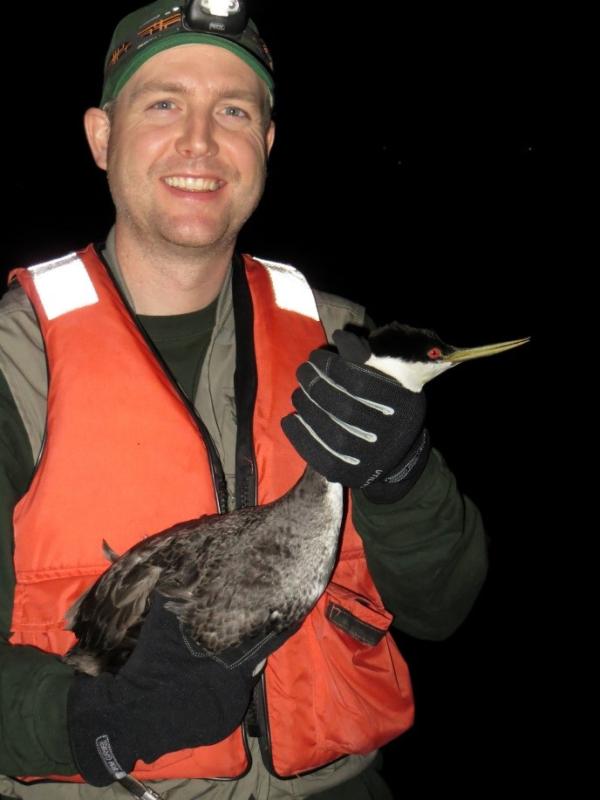
Speaker Bio: Dr. Josh Ackerman is a Principal Investigator with the US Geological Survey, Western Ecological Research Center, at the Dixon Field Station and an Associate in the Department of Wildlife, Fish, and Conservation Biology at the University of California, Davis. His expertise is in avian ecology and ecotoxicology, and his research program focuses on the demography of breeding birds (particularly waterfowl and waterbirds), the ecology and management of migratory birds and wetlands, contaminant bioaccumulation in fish and wildlife, and effects of contaminants on animal health and populations. He has published over 250 peer-reviewed journal articles, book chapters, and technical reports. Websites: USGS Staff Profile; Google Scholar Publications; ORCID Publications.
Scientific Questions
This research will help the Restoration Project answer a central scientific question in its Adaptive Management Plan under the topics of Migratory Shorebirds; and specifically Breeding Avocets, Stilts, and Terns:
- Will the habitat value and carrying capacity of South Bay for nesting and foraging migratory and resident birds be maintained or improved relative to current conditions?
- To what extent will the creation of large isolated islands in reconfigured ponds maintain numbers of terns and other nesting birds in the South Bay, while increasing densities of foraging birds over the long term compared to ponds not managed in this manner?
- Will California gulls, ravens, and crows adversely affect nesting birds in managed ponds?
Future Lunch and Learn Presentations
You can check the Events Page for later presentations, to register and find info. A future topic is:
- October: Creek and marsh connections. This will be our last Lunch and Learn presentation for the 2024-25 season.
Lunch and Learn Science Speaker Series
This presentation is one in a series put forth by the South Bay Salt Pond Restoration Project. The series addresses science and adaptive management done in support of or in collaboration with our Restoration Project as well as relevant outside work. Speakers discuss research, modeling, and monitoring efforts and how Restoration Project managers are using science to inform decisions about restoration, flood risk management, and public access.